150 Sudoku Puzzle Book for Kids Vol.5: A Strategic Asset for Digital Creators and Educators
In the rapidly evolving landscape of digital publishing and educational resources, efficiency without compromising quality is the ultimate metric for success. For entrepreneurs, educators, and content creators operating in the low-content book niche or homeschooling sector, the 150 Sudoku Puzzle Book for Kids Vol.5 represents more than just a collection of logic games; it is a streamlined production asset designed to bridge the gap between creative intent and market-ready execution. This ready-to-print PDF puzzle book addresses specific pain points in modern self-publishing workflows by offering a pre-formatted, professionally structured interior that eliminates hours of repetitive design labor.
The relevance of this specific volume lies in its precise technical specifications tailored for current print-on-demand (POD) standards and digital distribution. With 188 pages formatted for standard 8.5″ x 11″ paper, this resource aligns perfectly with the most popular trim size in the children’s activity book category. Unlike generic templates that require extensive resizing or margin adjustments, this file is engineered for immediate utility. Whether you are a freelancer building a portfolio of educational products, a marketer expanding a brand’s merchandise line, or a parent seeking structured cognitive activities, understanding the strategic value of this pre-made asset is essential for navigating today’s competitive digital marketplace.
The Shift Toward Streamlined Creative Workflows
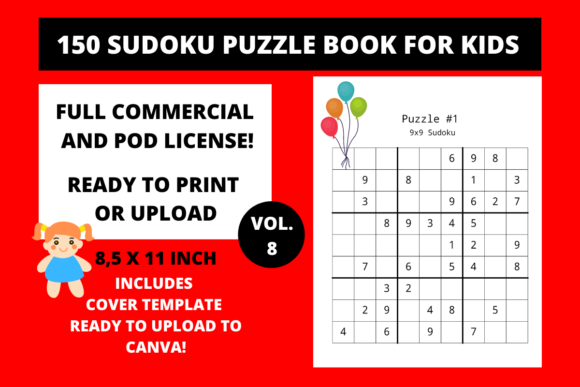
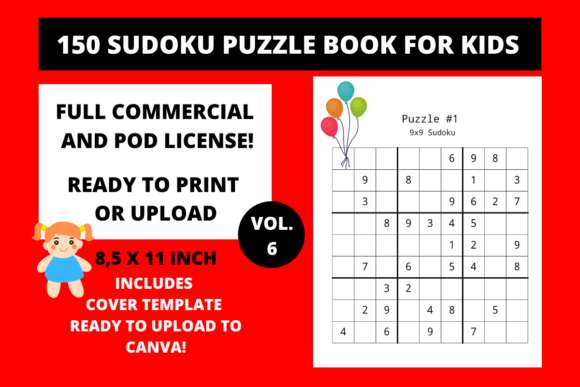
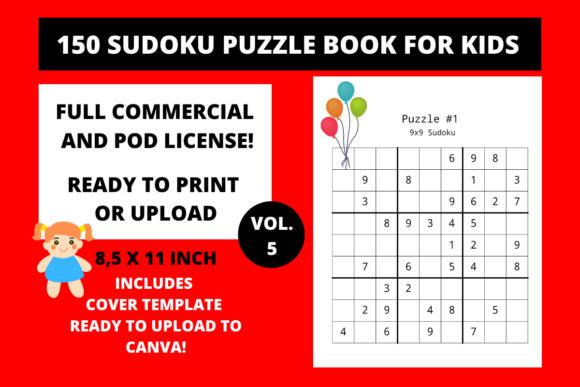
The era of spending weeks manually generating individual sudoku grids has largely passed for professional creators. As the barrier to entry for digital publishing lowers, the differentiator shifts from mere access to tools toward speed of implementation and curation quality. Modern workflows prioritize modular assets that can be customized rather than created from scratch. The 150 Sudoku Puzzle Book for Kids Vol.5 fits directly into this agile methodology. By providing a complete 9x9 grid layout with one puzzle per page, it respects the end-user's experience while simultaneously serving the creator's need for scalability.
This shift is particularly evident among bloggers and niche site owners who use lead magnets to build email lists. A high-quality, branded puzzle book serves as an excellent incentive for audience engagement. However, creating such a resource internally often yields a poor return on investment due to time costs. Utilizing a ready-to-print solution allows these professionals to pivot quickly, testing market demand for logic puzzles without significant upfront development time. The inclusion of four sudoku answers per page in the answer key section further demonstrates an understanding of user experience, balancing thoroughness with space efficiency—a critical factor when managing page counts and printing costs in POD models.
Technical Specifications and User Experience Design
Success in the activity book market depends heavily on formatting precision. Users, particularly parents and educators, have little tolerance for cramped layouts or confusing answer keys. This volume adheres to strict usability standards:
- Standardized Dimensions: The 8.5″ x 11″ format provides ample whitespace around each 9x9 grid, which is crucial for younger solvers who may need room for notes or erasures.
- Single Puzzle Focus: Placing only one puzzle per page reduces cognitive load and prevents visual clutter, making the book accessible for children developing focus and patience.
- Optimized Answer Key: Fitting four answers per page keeps the back matter concise, ensuring the book remains within optimal thickness ranges for binding while remaining easy to navigate.
- Page Count Efficiency: At 188 pages, the book hits a sweet spot for perceived value versus production cost, offering substantial content without inflating shipping fees.
These specifications are not arbitrary; they reflect data-driven insights into what performs well in current marketplaces. For creators uploading to platforms like Amazon KDP or Lulu, adhering to these proven dimensions minimizes rejection risks and maximizes customer satisfaction ratings.
Leveraging Integrated Design Tools for Brand Consistency
One of the most significant friction points in using pre-made interiors is the disconnect between the generic interior and the creator’s unique brand identity. This is where the included PNG cover template becomes a pivotal feature. In an ecosystem dominated by Canva and similar browser-based design tools, compatibility is king. Providing a dedicated cover template ensures that the spine width, bleed areas, and safe zones match the 188-page interior exactly.
For marketers and business owners, this integration facilitates rapid A/B testing of cover designs. You can create multiple variations of the front cover using the same base template to see which color schemes, typography, or imagery resonate best with your target demographic. This agility is impossible when cover dimensions must be recalculated for every interior adjustment. Furthermore, for educators creating custom curriculum supplements, the ability to easily overlay school logos or specific lesson branding onto a professional template transforms a generic commodity into a bespoke learning tool. This capability aligns with the broader trend of personalization in education, where resources are increasingly adapted to fit specific classroom cultures or home learning philosophies.
Educational Value in a Screen-Saturated Era
Beyond the logistics of creation, we must address why this product matters to the end consumer. Parents and educators are actively seeking alternatives to passive screen time. Sudoku offers a tangible, offline cognitive workout that develops logical reasoning, pattern recognition, and persistence. Volume 5 of this series continues to serve this growing demand for "brain breaks" and mindful activities.
However, the modern approach to these puzzles differs from previous decades. Today’s users expect clean aesthetics and frustration-free navigation. The decision to limit the grid to a single 9x9 puzzle per page acknowledges the attention span of contemporary children accustomed to digestible content chunks. It also supports differentiated instruction; teachers can assign specific pages without worrying about students accidentally seeing adjacent solutions or becoming overwhelmed by dense text. For homeschoolers, this structure allows the book to function as a standalone logic module that can be integrated into morning baskets or quiet time routines seamlessly.
Practical Implications for Entrepreneurs and Freelancers
For those treating puzzle books as a business vertical, the 150 Sudoku Puzzle Book for Kids Vol.5 serves as a foundational product that can be bundled, repurposed, or used as a tripwire offer. The "ready to upload" nature of the PDF means that the time-to-market is reduced to the duration of cover customization and platform processing. This speed allows freelancers to take on more clients or manage multiple niches simultaneously.
Consider the practical application for a family travel blogger. Instead of writing a generic post about keeping kids busy on planes, they can offer this branded puzzle book as a paid download or physical affiliate recommendation. The professional formatting lends credibility to their advice, while the specific kid-friendly layout ensures the product actually solves the reader's problem. Similarly, tutors can use the PDF to print custom worksheets for summer bridge programs, knowing the difficulty curve and layout are consistent throughout the 150 puzzles.
It is important to manage expectations realistically. While this asset removes technical barriers, success still requires marketing effort, keyword research, and audience understanding. The book is a vehicle, not a guarantee. However, by eliminating the production bottleneck, it allows creators to focus their energy on the aspects of business that actually drive growth: community building, advertising strategy, and customer feedback analysis.
Navigating Licensing and Commercial Use
When incorporating ready-made assets into a commercial workflow, understanding usage rights is paramount. Professionals must verify whether the license permits modification, redistribution, or use in subscription services. This specific package typically targets creators looking for PLR (Private Label Rights) or commercial use permissions, but due diligence is always required. Smart entrepreneurs treat this PDF as a starting point rather than a final destination. Adding unique introductions, bonus tips for solving, or thematic illustrations can transform a licensed asset into a proprietary product that stands up to copyright scrutiny and adds genuine value for the buyer.
Furthermore, maintaining version control is essential. As you iterate on covers or bundle this volume with others, keeping organized records of which PDF version corresponds to which live product prevents customer service issues down the line. The standardized naming convention implied by "Vol.5" suggests a series strategy, encouraging creators to think longitudinally about their product catalog rather than as isolated releases.
Future-Proofing Your Content Strategy
The demand for structured, screen-free cognitive activities shows no signs of diminishing. If anything, as AI and automation permeate daily life, the premium on human-centric skills like logic and focused attention increases. Products like the 150 Sudoku Puzzle Book for Kids Vol.5 position creators at the intersection of traditional educational values and modern digital convenience.
Looking forward, we can anticipate a greater integration of these static assets with dynamic digital experiences. Creators might use this PDF as the core content for a hybrid product, pairing the printable puzzles with video tutorials or an online community challenge. The clean, standardized layout of this volume makes it exceptionally easy to digitize or adapt for tablet use if desired, though its primary strength remains in its print-ready optimization. By securing high-quality, flexible assets now, builders establish a scalable foundation that can evolve alongside changing platform algorithms and consumer preferences.
Ultimately, this resource exemplifies the mature phase of the digital creator economy. It moves beyond the novelty of "making stuff" toward the professionalism of "delivering value efficiently." Whether you are an educator enhancing your toolkit, a parent supporting your child’s development, or an entrepreneur optimizing your publishing pipeline, this sudoku volume offers a pragmatic, high-utility solution that respects both your time and your audience’s needs. The combination of technical readiness, user-centered design, and creative flexibility makes it a relevant component in any modern content or educational strategy.