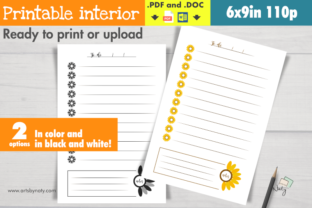
Sunflower To-Do List Printable Interior: Strategic Planning for Creators and Publishers
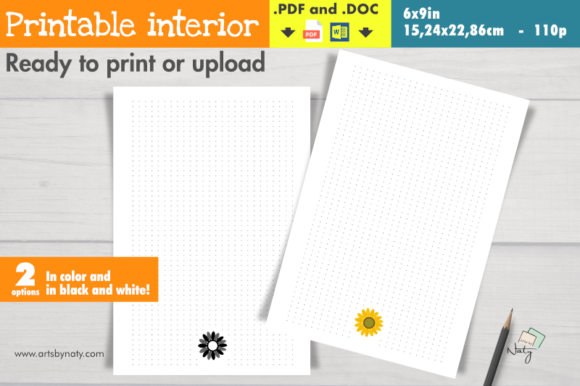
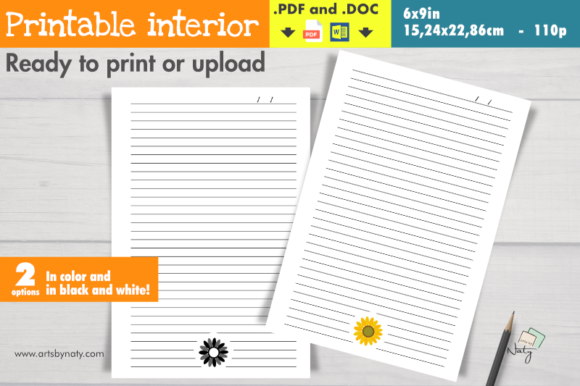
The Sunflower to-do List Printable Interior represents more than a seasonal aesthetic; it is a functional asset for low-content book publishers, digital product creators, and productivity enthusiasts seeking to merge visual appeal with operational utility. For entrepreneurs and marketers in the stationery niche, success relies on balancing artistic trends with practical usability. This specific interior template offers a strategic solution by providing a ready-to-publish foundation that caters to two distinct market segments simultaneously through colored and black-and-white variations. Understanding how to leverage this 6x9 inch, 110-page resource requires moving beyond simple design appreciation to analyzing its role in product positioning, customer experience, and long-term brand consistency.
Dual-Format Versatility as a Market Positioning Tool
A critical decision point for any publisher or creator using the Sunflower to-do list printable interior is determining which format best serves their target audience. The inclusion of both colored and black-and-white files is not merely a convenience; it is a strategic lever for market segmentation. Each option addresses different user needs, production costs, and value propositions.
The Colored Interior Strategy
The colored version of the sunflower themed to-do list targets the premium segment of the market. Users in this demographic prioritize aesthetics, emotional connection, and immediate visual gratification. From a business perspective, this format supports higher price points and is ideal for digital downloads where printing costs are irrelevant. However, for physical KDP publishing, standard color printing significantly increases the unit cost. Strategically, the colored interior should be reserved for:
- Premium Digital Products: Etsy or Gumroad listings where customers print at home on high-quality paper.
- High-Margin Physical Books: Journals positioned as gifts or luxury self-care tools rather than utilitarian notebooks.
- Brand Alignment: Businesses whose visual identity relies heavily on vibrant, saturated branding.
The Black and White Interior Advantage
The black and white option is the workhorse for scalable publishing operations. It drastically reduces printing costs on platforms like Amazon KDP, allowing for competitive pricing while maintaining healthy royalty margins. Furthermore, many users prefer grayscale interiors because they allow for personal customization through highlighting, coloring, or annotation without competing with pre-existing colors. This version supports volume strategies and broad-market appeal. When utilizing the Sunflower to-do List Printable Interior in monochrome, focus on contrast and line weight to ensure the sunflower illustrations remain distinct and engaging even without color saturation.
Enhancing User Experience Through Intentional Design
Productivity tools fail when form overrides function. The strategic value of this notebook lies in its specific layout choices, particularly the use of sunflower illustrations for checkboxes. While charming, this design element must serve a cognitive purpose. Visual cues in planning tools help reduce friction and increase engagement. For adults aged 20–50 managing complex schedules, the transition from sterile corporate planning to nature-inspired organization can lower psychological resistance to task management.
However, creators must evaluate the density of these illustrations. A successful sunflower to-do list printable interior maintains ample whitespace. Overcrowding the page with botanical elements can overwhelm users who need mental clarity. The 6x9 inch (15.24×22.86 cm) trim size is optimal for portability, but it demands disciplined layout management. Before finalizing your product, test the writing space. Ensure that the sunflower checkboxes do not encroach upon the lines needed for detailed task descriptions. The goal is to facilitate better decisions and clearer thinking, not just to provide pretty stationery.
Customization and Intellectual Property Management
Owning editable DOC files alongside print-ready PDFs transforms this product from a static template into a flexible business asset. The ability to edit the "This notebook belongs to" page and the "Copyright" page is essential for professional differentiation. Generic interiors lead to commoditized products; customized interiors build brands.
Strategic Editing Guidelines
When modifying the Sunflower to-do List Printable Interior, approach customization with intent rather than impulse. Consider the following operational adjustments:
- Branding Integration: Use the copyright page to include your website, social media handles, or QR codes linking to complementary digital resources. This turns a passive notebook into an active marketing touchpoint.
- Niche-Specific Language: Edit the ownership page to reflect your specific audience. Changing generic text to "This Planner Belongs to a Creative Entrepreneur" or "Teacher’s Sunflower Task Tracker" immediately signals relevance to search algorithms and potential buyers.
- Legal Protection: Clearly define usage rights on the copyright page. If you are selling physical copies, clarify whether customers can reproduce pages for personal use. Clear terms prevent future disputes and establish professional credibility.
The absence of watermarks in the delivered files is a significant operational advantage. It ensures a clean end-product that respects the customer’s purchase. Always verify that your edits maintain consistent margins and bleed settings, especially when working with the DOC files, to avoid formatting errors during the KDP upload process.
Risk Mitigation and Contextual Application
While the sunflower to-do list printable interior is a versatile tool, relying on it without clear goals introduces risk. The primary danger in the low-content publishing space is market saturation. Sunflowers are a perennial favorite, meaning competition is established. To mitigate this, you must contextualize the interior within a broader strategy.
Avoid using this template as a standalone solution if your brand lacks cohesion. A sunflower notebook released by a tech-focused productivity coach may create cognitive dissonance unless framed intentionally—perhaps as a "digital detox" or "mindful planning" companion. Additionally, consider seasonality. While sunflowers have year-round appeal, demand peaks in late summer and early autumn. Strategic planners will schedule launches 45–60 days before peak season to capture early momentum and secure reviews before the market floods.
Another risk involves quality control across formats. The colored PDF and black-and-white PDF may render differently depending on screen calibration and printer profiles. Always order a physical proof of both versions before listing. Verify that the grayscale conversion retains sufficient detail in the sunflower illustrations and that the colored version prints accurately within KDP’s color gamut. Customer returns due to poor print quality erode profitability and damage seller metrics far faster than any marketing campaign can repair.
Operational Workflow for Maximum Efficiency
To extract maximum value from this 110-page interior, integrate it into a streamlined production workflow. Having both PDF and DOC files allows for rapid iteration. Establish a master project file system where your customized DOC versions are archived separately from the original templates. This preserves the integrity of the source material while enabling unlimited derivative works.
For educators and freelancers using this for personal or client-facing planning, treat the interior as a framework rather than a constraint. The sunflower checkboxes provide structure, but the open lines invite adaptation. Encourage users to develop their own coding systems within the provided layout. This flexibility extends the product's lifecycle and increases perceived value. When marketing the Sunflower to-do List Printable Interior, highlight this adaptability. Show examples of how different professionals—from bloggers tracking content calendars to small business owners managing inventory—utilize the same base template for vastly different outcomes.
Making Informed Decisions for Long-Term Results
Ultimately, the decision to utilize this specific printable interior should align with your broader business objectives. Ask yourself whether the sunflower motif reinforces your brand narrative or merely follows a trend. Evaluate whether the 6x9 size fits your customers' lifestyle patterns. Determine if offering both color and B&W options expands your reach or unnecessarily complicates your inventory management.
Successful creators view assets like the sunflower to-do list printable interior through the lens of ROI and customer satisfaction. They understand that beautiful design attracts attention, but functional design retains customers. By leveraging the editable nature of the DOC files, respecting the distinct use cases of colored versus monochrome formats, and maintaining rigorous quality standards, you transform a simple template into a sustainable revenue stream. The goal is not just to publish a notebook, but to provide a tool that genuinely supports the planning, creativity, and productivity of your audience. When executed with this level of strategic intention, the result is a product that stands out in a crowded marketplace and delivers lasting value to both the creator and the end-user.