Monthly Planner 2021: A Strategic Framework for Intentional Organization
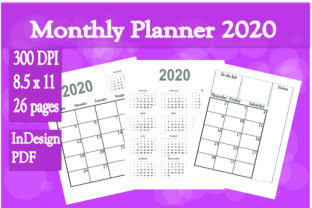
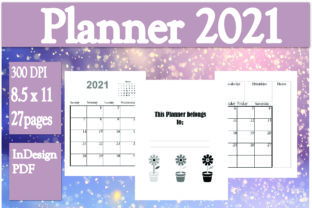
Effective planning is rarely about filling empty boxes; it is about creating a reliable infrastructure for decision-making and execution. The Monthly Planner 2021 serves as more than a simple chronological reference; it functions as a customizable operational system designed to bridge the gap between high-level strategy and daily action. For professionals, entrepreneurs, and creators, the value of this resource lies in its adaptability. By providing a fully editable InDesign file alongside a print-ready PDF, this 27-page template allows users to tailor their organizational tools to specific workflows rather than forcing complex lives into rigid, pre-printed structures.
Strategic organization requires tools that respect both aesthetic standards and functional necessities. This planner addresses both by offering high-resolution 300DPI assets at standard 8.5 x 11 inch dimensions, ensuring professional quality whether used digitally or in print. The inclusion of dedicated sections for priorities, to-do lists, and notes on every monthly spread transforms passive scheduling into active management. When utilized intentionally, this framework supports clearer communication with stakeholders, better resource allocation, and a tangible record of progress that extends beyond mere task completion.
Leveraging Customization for Operational Alignment
The primary differentiator of this Monthly Planner 2021 is the inclusion of the source InDesign file. Most planning tools are static, offering a one-size-fits-all approach that often fails to accommodate niche requirements. Access to the source file shifts the user from consumer to architect. This capability is strategically significant for small business owners and freelancers who need their planning documents to align with broader brand identities or specific project methodologies.
Consider the practical application for a marketing agency managing multiple client accounts. A generic planner might offer space for "tasks," but an agency needs space for "campaign KPIs," "content deliverables," and "client approvals." With the editable InDesign file, you can rename headers, adjust grid layouts, and integrate specific tracking metrics directly into the monthly view. This alignment reduces cognitive friction; when your planning tool speaks the same language as your business operations, you spend less time translating goals and more time executing them.
Furthermore, customization supports team cohesion. If you are distributing this planner to staff or using it as a client-facing deliverable, the ability to remove watermarks and apply consistent branding ensures a polished, professional presentation. The "This calendar belongs to" page, featuring elegant floral decoration, can be modified to include company logos or department names, turning a personal utility into a branded organizational asset. This attention to detail reinforces professionalism and signals that organization is a core value of your operation.
Integrating Priorities and Execution Metrics
A common failure point in personal and professional planning is the disconnect between long-term objectives and monthly activities. The Monthly Planner 2021 mitigates this risk through its structured layout. Each of the 27 pages includes dedicated zones for Priorities, To-Do Lists, and Notes. These are not merely decorative elements; they are strategic prompts designed to enforce hierarchy in your workflow.
To use this effectively, distinguish clearly between the "Priorities" and "To-Do" sections. Priorities should represent outcome-based goals—the three to five critical results that define success for that month. To-do lists, conversely, should contain the tactical steps required to achieve those priorities. Without this distinction, planners often devolve into endless task lists that feel productive but yield little strategic progress. The Notes section provides essential overflow space for context, meeting takeaways, or iterative brainstorming that doesn't fit neatly into a checkbox but remains vital for future reference.
- Outcome Definition: Use the Priorities section to define what "done" looks like before listing tasks.
- Capacity Planning: Utilize the visual space of the 8.5 x 11 layout to realistically assess how many priorities can fit in a single month.
- Context Retention: Leverage the Notes area to document decisions and rationale, creating a historical record for quarterly reviews.
- Visual Hierarchy: Adjust font weights and sizes in InDesign to make high-impact items visually dominant over routine maintenance tasks.
Strategic Use Cases Across Professional Domains
The versatility of the Monthly Planner 2021 makes it applicable across diverse professional landscapes, provided the user approaches it with clear intent. For educators and academics, the 2021 calendar structure facilitates semester-long curriculum mapping, where the Notes section can track student engagement trends or research milestones alongside teaching schedules. The clean, uncluttered design helps manage the mental load of academic administration without adding visual noise.
For content creators and bloggers, this planner serves as an editorial command center. The monthly view allows for macro-level content pacing, while the integrated to-do lists handle production logistics. Because the file is editable, creators can add columns for platform-specific metrics or sponsorship deadlines, transforming a general planner into a specialized content calendar. This consolidation prevents information silos where creative ideas exist in one app and logistical deadlines in another.
Entrepreneurs and decision-makers benefit from the planner’s role as a "thinking partner." The physical act of writing or typing into a structured format slows down the planning process, encouraging deeper consideration than rapid digital entry often allows. The 2021 calendar acts as a boundary, reminding users of finite time resources. When reviewing past months (if used retrospectively) or planning future sprints, the consistent layout enables pattern recognition. You can quickly identify months where priorities were consistently missed, signaling a need to adjust capacity expectations or delegate tasks.
Technical Specifications and Quality Assurance
Reliability in planning tools extends to their technical performance. This product is delivered at 300DPI, the industry standard for crisp, professional printing. Whether you are printing a single copy for your desk or producing a batch for a corporate retreat, the resolution ensures that text remains sharp and floral decorations retain their detail. The 8.5 x 11 inch dimension is compatible with standard home and office printers, removing barriers to immediate implementation.
The absence of watermarks is a critical feature for professional use. Nothing undermines the perceived value of a planning system or a client deliverable faster than third-party branding. Clean files demonstrate respect for the end-user and maintain the integrity of your own brand environment. Additionally, the dual-format delivery (InDesign and PDF) provides redundancy; if you lack access to Adobe software at a specific moment, the PDF remains fully functional for printing or digital annotation on tablets.
Mitigating Risks and Avoiding Planning Fallacies
While the Monthly Planner 2021 is a powerful tool, it is not a panacea. Relying on any planner without a supporting strategy can lead to the "planning fallacy," where the act of organizing substitutes for actual work. A beautifully formatted page filled with unrealistic goals creates a false sense of security. To avoid this, treat the planner as a mirror of reality, not a wish list.
One significant risk is over-customization. Because the InDesign file allows for extensive modification, users may spend excessive hours tweaking fonts and layouts instead of planning. Set strict parameters for customization. Define your template once based on proven workflow needs, then lock it down. Consistency breeds familiarity, and familiarity reduces the cognitive load required to use the tool effectively throughout the year.
Another consideration is the rigidity of a monthly view. Some projects require weekly or daily granularity that a monthly spread cannot capture. Use this planner as the strategic layer of a broader system. Let the Monthly Planner 2021 hold your commitments and major milestones, while delegating minute-by-minute scheduling to a separate digital calendar or daily journal. Attempting to force micro-scheduling into a monthly macro-view leads to clutter and frustration.
- Audit Before Design: Review your previous planning failures before opening the InDesign file. Design solutions for specific pain points, not hypothetical ones.
- Establish Review Rituals: Schedule time at the end of each month to migrate unfinished priorities. The planner’s consistency makes this migration efficient.
- Test Print First: Always print a test page to verify margins and binding clearance before committing to a full year, especially if customizing dimensions.
- Digital vs. Analog Decision: Decide upfront whether this will be a printed artifact or a digital tablet resource. This choice influences how you interact with the Notes and To-Do sections.
Building Long-Term Value Through Consistent Documentation
The true ROI of the Monthly Planner 2021 emerges over time. As you populate successive months, the planner evolves from a forward-looking guide into a backward-looking archive. This historical data is invaluable for annual reviews, performance assessments, and capacity forecasting. When you can visually scan twelve months of priorities and notes, you gain insights into seasonal energy fluctuations, recurring bottlenecks, and achievement velocity that isolated digital entries rarely reveal.
For freelancers and consultants billing by the project, these records also serve as evidence of scope and effort. The detailed notes and priority tracking provide documentation that can justify rate increases or clarify scope creep during contract renewals. In this sense, the planner becomes a business intelligence tool disguised as a stationery item.
Ultimately, the effectiveness of this product depends on the intentionality of the user. It provides the canvas, the resolution, and the structural flexibility necessary for high-level organization. However, the strategy must come from you. By treating the Monthly Planner 2021 as a dynamic component of your professional ecosystem—customized via InDesign to fit your exact contours and used with disciplined focus on priorities—you transform a simple calendar into a catalyst for sustained achievement and operational clarity.