Optimizing Your Catalog with a 3 Month Daily Productivity Planner KDP Asset
The low-content publishing landscape on Amazon has evolved significantly, moving away from generic lined notebooks toward specialized, high-utility tools that solve specific problems for niche audiences. Among the most effective formats for sustained sales is the quarterly planning system. Integrating a 3 Month Daily Productivity Planner KDP asset into your publishing portfolio offers a strategic advantage over traditional annual planners. This format aligns perfectly with modern consumer behavior, which favors manageable, short-term goal setting over overwhelming year-long commitments. For publishers, this specific interior template provides a streamlined workflow for creating professional-grade books without the extensive design overhead usually associated with complex layouts.
Technical Specifications and File Preparation
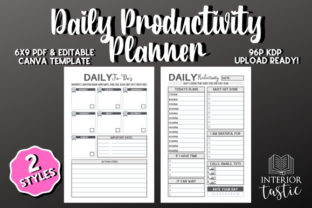
Success in low-content publishing relies heavily on adhering to precise technical standards while maximizing production efficiency. The current industry standard for this type of planner utilizes a 6x9 inch trim size with no bleed. This specification is critical for several reasons. First, the 6x9 dimension is the "goldilocks" size for productivity tools; it is portable enough for daily commuting yet offers sufficient surface area for detailed scheduling and note-taking. Second, the no-bleed configuration simplifies the printing process and reduces potential margin errors during the KDP approval phase.
The core asset consists of a 96-page PDF interior. This page count is mathematically optimized for a quarterly duration. When accounting for front matter, section dividers, and monthly reviews, 96 pages provide adequate space for three months of daily tracking without resulting in an overly thick spine that might deter buyers looking for portability. While the provided PDF is ready for immediate upload, experienced publishers understand the value of customization. If you are not utilizing Canva for edits, it is highly recommended to create and merge a dedicated “This Journal Belongs To” page. This simple addition transforms a generic file into a personalized user experience, increasing perceived value and reducing return rates due to unmet expectations regarding ownership personalization.
Leveraging Editable Templates for Brand Differentiation
A significant advantage of acquiring this specific 3 Month Daily Productivity Planner KDP package is the inclusion of a Canva editable template. In a marketplace saturated with identical interiors, the ability to modify fonts, headers, and layout elements is what separates profitable catalogs from stagnant ones. Publishers can use the editable source file to:
- Rebrand Headers: Change generic titles like "Daily Plan" to niche-specific terminology such as "Lesson Prep" for teachers or "Patient Rounds" for medical professionals.
- Adjust Typography: Modify font sizes to accommodate users with visual impairments or those who prefer minimalist aesthetics.
- Add Proprietary Content: Insert unique motivational quotes, instructional guides, or affiliate links to digital resources that complement the physical planner.
- Create Series Variations: Use the same base structure but alter color accents or iconography to create a cohesive brand family across multiple SKUs.
This flexibility ensures that even though the underlying structural logic remains consistent, each published book appears distinct to both the Amazon algorithm and potential customers.
User Experience and Functional Design Logic
To market a productivity planner effectively, one must understand the psychological framework behind its design. A quarterly planner operates on the principle of cognitive chunking. Ninety days represents a complete cycle of habit formation and project execution without the fatigue associated with annual planning. The interior design of this 96-page template supports this workflow through structured repetition. Unlike blank journals, a professionally designed productivity planner reduces decision fatigue. Users do not have to draw lines or create structures every morning; they simply engage with the pre-existing framework.
The daily spread typically includes sections for prioritization, time-blocking, and reflection. These elements are not arbitrary; they mirror established productivity methodologies like Getting Things Done (GTD) or the Eisenhower Matrix. By embedding these systems directly into the paper goods, the planner becomes an active coaching tool rather than a passive recording device. For educators and researchers, this structure facilitates granular tracking of experiments or curriculum milestones. For business owners, it serves as a tactical bridge between high-level strategy and daily execution. Understanding these use cases allows publishers to write better metadata and ad copy that speaks directly to the functional benefits of the product.
Strategic Niche Applications Beyond General Planning
While general productivity is a viable category, the true power of this 3 Month Daily Productivity Planner KDP asset lies in its adaptability to vertical markets. The quarterly timeframe is naturally suited to industries and lifestyles that operate in seasonal or academic cycles. Consider the following applications where a 90-day horizon is superior to a calendar year:
- Academic Research and Grant Writing: Researchers often work in grant cycles or semester blocks. A 3-month planner allows PhD candidates and faculty to map out literature reviews, data collection phases, and writing sprints without the clutter of irrelevant holiday dates found in standard planners.
- Fitness and Nutrition Coaching: Most transformation programs run for 12 weeks. Fitness coaches can white-label this interior to create branded client workbooks that track macros, workouts, and mindset shifts in alignment with their program duration.
- Corporate Onboarding: HR departments frequently utilize 90-day probationary periods. A specialized planner for new hires can guide them through learning objectives, networking goals, and performance checkpoints during their critical first quarter.
- Seasonal Business Management: Retailers, tax professionals, and event planners have intense peak seasons. A quarterly planner focused specifically on Q4 retail prep or tax season offers higher utility than a full-year book that sits unused for eight months.
By targeting these specific cohorts, publishers can reduce competition and increase conversion rates. The editable template makes pivoting to these niches a matter of changing text labels rather than redesigning entire layouts.
Market Positioning and Catalog Expansion
Incorporating this hot new daily productivity planner into your low-content library should be viewed as a catalog expansion strategy rather than a single product launch. The 3-month format encourages repeat purchases. Customers who find value in the system for January through March are statistically likely to return for the April through June edition. This creates a natural recurring revenue model that annual planners cannot match. Furthermore, the lower page count (96 pages) results in lower printing costs compared to 200+ page annual planners. This margin flexibility allows for competitive pricing or higher royalty per unit sold.
When listing this product, transparency regarding the interior is paramount. Since the cover design is not included, your marketing materials and A+ content must clearly showcase the internal spreads. Customers need to verify that the layout suits their handwriting style and organizational needs before purchasing. Highlighting the "professionally designed" aspect helps distinguish your offering from amateur creations. Emphasize that the interior is print-ready and formatted correctly for KDP, which reassures buyers concerned about quality control issues common in self-published stationery.
Implementation Best Practices for Publishers
For those adding this asset to their workflow, adherence to best practices ensures long-term viability. Always validate the PDF against KDP’s latest previewer tool before publishing, even if the file is marketed as ready-to-upload. Platform specifications can change, and verifying margins prevents rejection. When merging the “This Journal Belongs To” page, ensure the resolution matches the main interior (typically 300 DPI) to avoid blurry text on the first page.
Additionally, consider the keyword strategy surrounding the term 3 Month Daily Productivity Planner KDP. While this is a strong descriptive phrase, successful listings also incorporate semantic variations related to the end-user's intent. Terms like "90-day goal journal," "quarterly executive planner," "academic semester organizer," and "undated daily tracker" capture traffic from users who may not know the exact industry terminology but are searching for the solution this book provides. The combination of a high-quality, professionally designed interior with smart niche targeting and technical precision creates a sustainable asset in the competitive digital publishing ecosystem.
Ultimately, the value of this resource extends beyond the 96 pages themselves. It represents a scalable system for producing high-utility paper goods that meet genuine market demand. Whether serving professionals managing complex projects, students navigating academic rigor, or creators tracking artistic output, the quarterly productivity planner fills a specific gap in the analog organization market. By leveraging the editable nature of the template and respecting the technical requirements of the platform, publishers can build a robust library of functional tools that deliver real-world value to a diverse audience.