Streamlining Self-Care Publishing: The Strategic Value of a Tested Gratitude Journal KDP Interior
The landscape of self-publishing has shifted dramatically over the last decade. What began as a frontier for authors with manuscripts has evolved into a sophisticated ecosystem for creators, entrepreneurs, and marketers building asset-based businesses. Within this evolution, the low and no-content book category has matured from a speculative gold rush into a legitimate sector of the publishing industry. However, as the market saturates, the margin for error diminishes. Success now hinges not merely on participation but on professional execution and operational efficiency. This is where a high-quality Gratitude Journal KDP Interior becomes more than just a digital file; it serves as a foundational infrastructure for a sustainable publishing business.
For professionals and freelancers navigating the Amazon KDP platform, time is the most scarce resource. The technical friction of formatting, testing margins, and ensuring print-ready specifications can consume hours that should be spent on keyword research, niche analysis, and brand building. A pre-formatted, tested interior eliminates this bottleneck, allowing creators to pivot from production to strategy. Understanding why this specific asset matters requires looking at the intersection of consumer wellness trends, technological workflows, and the economic realities of modern self-publishing.
The Convergence of Wellness Trends and Digital Publishing
To understand the enduring relevance of gratitude journaling products, one must look beyond the book itself and examine the broader cultural context. We are currently witnessing a significant shift in how consumers approach mental health and personal development. There is a growing fatigue with digital saturation; users are actively seeking analog solutions to digital problems. While meditation apps and wellness trackers have their place, there is a distinct counter-movement toward tactile, screen-free mindfulness practices.
This behavioral shift drives consistent demand for physical journals. Consumers are not just buying paper; they are purchasing a structured ritual. They seek tools that facilitate cognitive reframing and emotional regulation without the distraction of notifications. For the KDP publisher, this means the product must reflect this intentionality. A generic lined notebook no longer suffices. The market now rewards interiors that offer guided prompts, thoughtful layouts, and aesthetic coherence. A professionally designed Gratitude Journal KDP Interior bridges the gap between mass-market printing capabilities and the bespoke feel that modern wellness consumers expect. It transforms a commodity into a curated experience, aligning the physical product with the psychological needs of the target audience.
Operational Efficiency in a Low-Content Business Model
For entrepreneurs and marketers treating KDP as a scalable business rather than a hobby, unit economics and workflow velocity are paramount. The "no-content" label is somewhat of a misnomer; successful books in this space actually require significant structural content. Creating a 120-page interior from scratch involves complex decisions regarding gutter margins, safe zones, and typographic hierarchy. Even minor miscalculations can result in rejected uploads or poor customer reviews citing cut-off text.
This is where the value proposition of a ready-for-printing asset becomes clear. Utilizing a verified Gratitude Journal KDP Interior that is formatted and tested for KDP acts as an insurance policy against technical failure. When an interior is guaranteed to be 100% formatted and tested, the creator bypasses the iterative cycle of upload-reject-fix-upload. This reduction in friction allows for rapid prototyping of niches. Instead of spending a week designing a single interior, a publisher can deploy multiple variations across different sub-niches in the same timeframe.
Furthermore, consistency builds brand equity. When you utilize standardized, high-quality interiors, your publishing imprint develops a reputation for reliability. Customers who purchase one of your journals and find the layout intuitive and print-perfect are statistically more likely to trust future releases. In an algorithm-driven marketplace, positive user experiences signal quality to both human shoppers and recommendation engines.
Technical Precision: Trim Size, Bleed, and Page Count
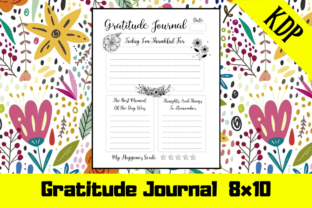
Specificity in product creation is not pedantry; it is a competitive advantage. The specification of an 8 x 10 trim size with no bleed is a strategic choice rooted in usability and cost-efficiency. Unlike smaller pocket journals, the 8 x 10 format provides ample whitespace, which is psychologically essential for reflective writing. Crowded pages induce stress, whereas generous margins invite contemplation. From a production standpoint, selecting "no bleed" simplifies the printing process and reduces the risk of trimming errors encroaching on content areas.
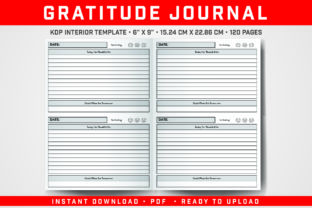
The 120-page count is equally deliberate. It strikes an optimal balance between perceived value and spine width. A journal that is too thin feels insubstantial and may not display its title clearly on a shelf. Conversely, a journal that is too thick can become intimidating, leading to abandonment before completion. One hundred and twenty pages offers enough depth for a sustained habit (roughly three to four months of daily use) while remaining portable and manageable. When these specifications are pre-baked into a Gratitude Journal KDP Interior, the publisher inherits these ergonomic and commercial optimizations without needing to conduct extensive physical prototyping.
Leveraging Variants for Market Segmentation
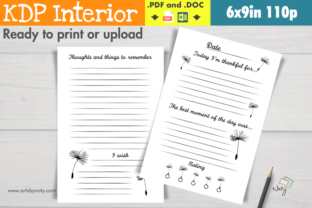
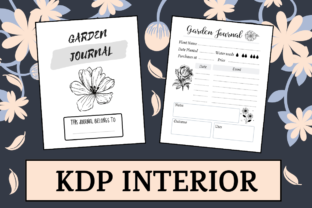
Modern marketing is rarely about finding one universal solution; it is about segmentation. Different demographics respond to different visual languages and prompting structures. A minimalist line-art aesthetic might appeal to a corporate professional seeking clarity, while a botanical motif might resonate with a creative enthusiast focused on growth. This is why access to 4 different variants of PDF files is a critical feature for serious publishers.
Having multiple variants allows for A/B testing within the organic marketplace. Publishers can release the same core concept with different interior styles to see which resonates with specific search intents. Perhaps Variant A converts better for "mindfulness for men," while Variant B performs superiorly for "teacher appreciation gifts." Without pre-made variants, this level of granular testing would be cost-prohibitive due to design time. With them, it becomes a standard part of the optimization workflow.
Moreover, variants extend the lifecycle of a single niche entry. Seasonal updates, rebranding efforts, and bundle creations all rely on having flexible assets. If a particular cover design trends during the holiday season, having a matching or complementary interior variant ready ensures you can capitalize on the traffic immediately. This agility is what separates passive income aspirants from active business operators.
The Shift Toward Quality-First Publishing Assets
The era of uploading untested, auto-generated PDFs to Amazon is ending. Platform algorithms and consumer sophistication are increasingly filtering out low-effort entries. Helpful Content guidelines, originally designed for web articles, are effectively being applied to marketplace products through review systems and bestseller rankings. Products that fail to deliver utility or suffer from formatting defects are quickly demoted.
In this environment, investing in a Gratitude Journal KDP Interior perfect for your low or no content business is an investment in compliance and longevity. It signals an adherence to quality standards that protects the account health of the publisher. Professional-grade interiors ensure that the focus remains on the user’s journey of gratitude, not on the printer’s limitations. When the technology becomes invisible, the value of the product shines through.
Additionally, as AI tools proliferate, the human element of curation gains premium status. Anyone can generate infinite pages of repetitive prompts. However, selecting a curated, tested, and ergonomically sound interior demonstrates editorial judgment. It shows that a human has considered the end-user's experience. For freelancers and agencies managing KDP portfolios for clients, providing these vetted assets adds tangible value to their service offerings. It moves the conversation from "I can make a book" to "I can build a compliant, market-ready product line."
Future-Proofing Your Creative Workflow
Looking forward, the integration of digital and physical products will likely deepen. We may see QR codes linking to audio meditations or community challenges embedded within journal interiors. Starting with a clean, professionally formatted base makes these future integrations significantly easier. A chaotic or poorly margined interior leaves no room for innovation. A structured Gratitude Journal KDP Interior provides the canvas upon which future features can be layered.
Ultimately, the decision to utilize pre-formatted, tested interiors is a decision to professionalize. It acknowledges that while the barrier to entry in self-publishing is low, the barrier to success is quality. By leveraging assets that are 100 formatted and tested for KDP, featuring 120 pages, 4 variants, and precise 8x10 no-bleed specifications, creators are not cutting corners. They are standing on a solid foundation, freeing their mental energy to focus on what truly matters: connecting with readers and building a resilient, responsive publishing business in a dynamic market.