Evaluating the Garden Journal KDP Interior for Low-Content Publishing
The low-content and no-content publishing sector on Amazon KDP has matured significantly, shifting from simple lined notebooks to specialized, functional tools. Among these niche products, the Garden Journal KDP Interior represents a specific category of medium-content books designed for horticulture enthusiasts. For publishers evaluating assets for their portfolio, understanding the structural and market viability of this specific interior is essential. This evaluation focuses on a pre-formatted, 120-page template available in three PDF variants with an 8x10 trim size and no bleed settings, analyzing its suitability for current business models.
Defining the Garden Journal KDP Interior Asset
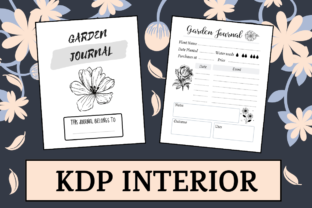
A Garden Journal KDP Interior is more than a blank notebook; it is a structured manuscript intended to guide users through the gardening season. Unlike generic journals, this asset typically includes dedicated sections for planting schedules, harvest logs, weather tracking, pest management notes, and garden layout grids. The specific asset under evaluation comes as a ready-to-print file, eliminating the design phase for the publisher. It is formatted specifically for Amazon’s printing requirements, featuring an 8x10 inch trim size which offers ample writing space without exceeding standard shipping thresholds. The "no bleed" specification indicates that all content is contained within safe margins, reducing the risk of rejection during the automated review process.
The inclusion of three different PDF variants suggests flexibility in layout or content density. This variation allows publishers to test different approaches or offer distinct editions (e.g., a vegetable-focused version versus a general ornamental version) without commissioning new designs. For a business focused on volume or rapid deployment, having tested, compliant files reduces the technical overhead associated with formatting margins, gutter space, and spine width calculations.
Strategic Fit for Low-Content Businesses
Publishers often seek assets that balance production speed with perceived customer value. The Garden Journal KDP Interior fits into a strategy where utility drives sales rather than cover art alone. There are several reasons a publisher might prioritize this specific type of interior over generic alternatives:
- Niche Specificity: Gardening is an evergreen hobby with seasonal spikes. A specialized journal targets high-intent buyers looking for organizational tools rather than just stationery.
- Reduced Development Time: Creating a functional 120-page gardening tracker requires significant research and design testing. Utilizing a pre-made, tested asset allows for immediate market entry.
- Higher Perceived Value: Medium-content books like garden planners often command higher price points than lined journals because they solve a specific problem. The structured pages justify a premium over blank paper.
- Technical Compliance: Files labeled as "tested for KDP" mitigate the risk of account warnings or publishing delays caused by margin errors, which are common in complex layouts.
Benefits and Practical Advantages
The primary benefit of adopting a pre-formatted Garden Journal KDP Interior is operational efficiency. The 8x10 trim size is strategically chosen for this niche; it provides enough surface area for drawing garden beds and writing detailed notes, yet remains portable enough for field use. The no-bleed format further simplifies production, as it removes the complexity of extending graphics to the page edge, ensuring text and lines remain crisp and within safe zones after trimming.
Furthermore, the 120-page count strikes a practical balance. It is substantial enough to cover a full growing season, including planning and retrospective analysis, but not so thick that it becomes unwieldy or expensive to print. For the end-user, this page count supports a comprehensive record-keeping habit. For the publisher, it maintains printing costs at a level that allows for competitive pricing while preserving royalty margins.
Tradeoffs and Critical Considerations
While convenient, relying on pre-made interiors involves specific tradeoffs that must be weighed against business goals. The most significant consideration is exclusivity. If the Garden Journal KDP Interior is a non-exclusive digital asset, other publishers may list identical or nearly identical books. In a saturated marketplace, differentiation becomes challenging. Publishers must rely heavily on unique cover design, keyword optimization, and branding to distinguish their product from others using the same internal pages.
Additionally, pre-formatted assets limit customization. If market research indicates a demand for specific regional planting zones or unique tracking metrics not included in the standard template, the publisher cannot easily modify the source file without advanced design skills. The "ready for printing" nature implies a finished product; altering it may void the "tested" status, requiring the publisher to re-verify margins and bleed settings independently.
Publishers should also consider the longevity of the design. Gardening trends evolve, and static templates may eventually appear dated. Unlike a custom-designed interior that can be updated annually, a purchased asset may require replacement or significant modification to remain relevant in future seasons.
Situational Analysis: When to Use vs. Alternatives
Determining whether this specific Garden Journal KDP Interior aligns with your objectives requires assessing your current business stage and resources.
Strong Fit Scenarios
This asset is ideal for publishers who are new to the gardening niche and need to validate market demand before investing in custom design. It is also suitable for businesses operating on a high-volume model where speed of publication is prioritized over unique intellectual property. If your strategy involves creating a series of seasonal planners and you lack the bandwidth to design complex interiors from scratch, this tested template serves as a reliable foundation. The 8x10 no-bleed format is particularly advantageous for publishers who have previously faced quality control issues with bleed-related rejections.
When to Consider Alternatives
If your business model relies on building a recognizable brand with proprietary content, a generic pre-made interior may dilute your value proposition. Established publishers with a loyal following often benefit more from custom interiors tailored to their audience's specific feedback. Additionally, if you are targeting a highly specialized sub-niche (e.g., hydroponics or bonsai), a general garden journal may be too broad. In such cases, hiring a designer or learning to create custom interiors yields better long-term asset value. Finally, if you intend to sell the book outside of Amazon KDP (e.g., via Etsy or direct sales), the strict KDP formatting constraints might limit your ability to optimize for other print-on-demand providers.
Decision-Making Framework for Publishers
To make a final determination, evaluate the Garden Journal KDP Interior against the following criteria:
- Market Gap Analysis: Review top-selling garden journals. Does this template offer features they lack, or does it merely replicate existing offerings? If it replicates, do you have a marketing angle that compensates?
- Royalty Projection: Calculate royalties based on the 120-page 8x10 black-and-white printing cost. Ensure the target price point remains competitive against established brands while meeting your margin requirements.
- Cover Differentiation Potential: Since the interior is fixed, assess whether you can create covers that distinctly signal a unique value proposition to browsers.
- Licensing Terms: Verify the usage rights. Confirm whether the license allows for unlimited publications or restricts the number of titles, and whether modifications are permitted.
- Quality Verification: Even if labeled "tested," always order a proof copy. Paper quality, line weight, and gray scale reproduction can vary. Ensure the user experience matches the digital preview.
Ultimately, the Garden Journal KDP Interior serves as a functional tool for scaling a low-content business. Its value lies in reducing technical friction and providing a proven structure for a passionate niche. However, sustainable success depends on integrating this asset into a broader strategy that addresses differentiation and audience needs beyond the printed page. By carefully weighing the convenience of a ready-made solution against the necessity of market uniqueness, publishers can determine if this 120-page, 8x10 template is the right component for their next release.