Streamlining KDP Publishing with a Korean Writing Book Template
Creating low-content books for Amazon Kindle Direct Publishing (KDP) has evolved from a simple side hustle into a sophisticated niche market. Among the most enduring categories are language learning and handwriting practice journals. For creators targeting the growing demand for Hangul literacy, utilizing a specialized Korean Writing Book KDP Template is not merely a convenience; it is a strategic necessity. This specific 8.5 x 11 no-bleed design offers a streamlined pathway to publishing professional-grade writing sheets without the technical headaches often associated with formatting non-Latin scripts.
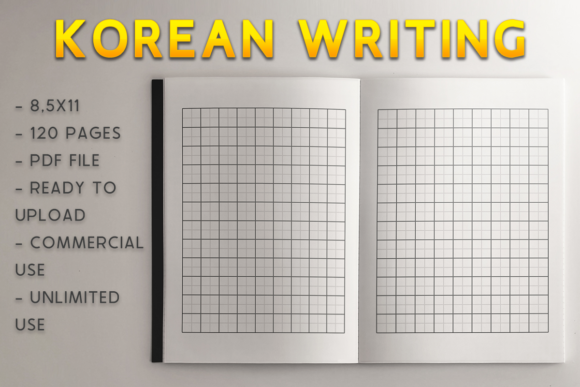
The primary appeal of this template lies in its immediate usability. As an instant download PDF containing 120 pages, it eliminates the hundreds of hours typically required to manually align grid lines or source royalty-free interiors that may have questionable licensing. By leveraging a pre-formatted Korean Writing Sheet Template, publishers can focus their energy on keyword research, cover design, and marketing strategy rather than pixel-perfect line adjustments. This shift in workflow allows for faster iteration and testing within the competitive educational niche.
Technical Specifications and No-Bleed Advantages
Understanding the physical parameters of your book is crucial for avoiding printing errors and ensuring customer satisfaction. This template is designed specifically at 8.5 x 11 inches, which is the industry standard size for American trade paperbacks and educational workbooks. This dimension provides ample surface area for practicing Hangul characters, which require more vertical and horizontal space than Latin alphabet letters due to their block-based structure.
A critical feature of this product is the No Bleed Design. In KDP terminology, "bleed" refers to images or graphics that extend beyond the trim edge of the page. While bleed is essential for full-color art books, it introduces significant complexity for black-and-white interior journals. Margins must be calculated precisely to prevent content from being trimmed off during the binding process. By choosing a no-bleed KDP Template, you ensure that all grid lines, guide boxes, and header text remain safely within the printable safe zone. This significantly reduces the rejection rate during the KDP review process and guarantees that the writing guides appear exactly where intended on every single page.
The 120-page count is another deliberate specification. It strikes an optimal balance between perceived value and printing cost. A book with fewer than 80 pages often feels insubstantial to buyers looking for a workbook, while exceeding 150 pages can drive up production costs enough to squeeze profit margins. At 120 pages, this Korean Writing Book Template sits in the sweet spot for pricing competitiveness while offering users sufficient material for weeks of consistent practice.
The Role of Grid Structure in Hangul Practice
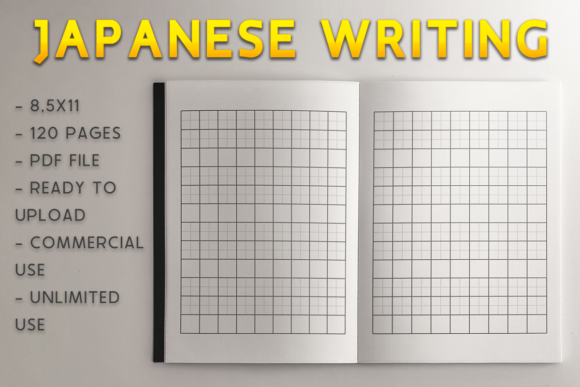
Unlike English cursive or print, which rely on four-line staves or simple ruled paper, Korean handwriting benefits immensely from structured box grids. The effectiveness of a Korean Writing Sheet Template depends entirely on the quality of these guides. Hangul syllables are composed of two to three morphemes arranged vertically or horizontally within a square block. Without proper spatial boundaries, learners struggle to maintain proportion and balance.
This template addresses that pedagogical need by providing consistent framing for each character. When evaluating any Korean Writing Book KDP Template, verify that the grid opacity is appropriate. Lines that are too dark distract from the user's pencil marks, while lines that are too faint fail to provide adequate guidance. Furthermore, the spacing between rows must account for the natural height of Korean characters plus breathing room for hand movement. A well-designed template handles these micro-typographic decisions automatically, ensuring the end product supports genuine skill acquisition rather than just filling pages.
Integrating Templates into Modern Publishing Workflows
In the current KDP ecosystem, speed and volume often correlate with success, but only when paired with quality. Using a ready-made PDF file transforms the creation process from a design project into an asset management task. For publishers managing multiple niches, this standardization is vital. You can create a series of language books—Japanese, Chinese, Korean—all sharing the same trim size and interior layout logic, thereby creating a cohesive brand identity across your catalog.
However, using a template does not mean sacrificing uniqueness. Successful publishers treat the Korean Writing Book KDP Template as a foundation rather than a final product. Consider adding value by inserting introductory pages that explain stroke order rules, basic consonant and vowel charts, or pronunciation tips before the 120 pages of practice sheets begin. Because the template is a standard PDF, it can be easily merged with other documents using free tools like PDF24 or Adobe Acrobat. This hybrid approach satisfies Amazon’s increasing preference for "helpful content" over generic duplicates.
Moreover, the digital nature of this instant download facilitates rapid prototyping. Before committing to a full marketing campaign, you can upload the KDP Template to previewer tools to check how the cover wraps around the spine relative to the interior. Since the no-bleed settings are pre-configured, you can generate proof copies with confidence, knowing that the internal geometry matches KDP’s latest printing specifications. This reduces the feedback loop between drafting and publishing from weeks to mere days.
Navigating Licensing and Commercial Use
One of the most important considerations when adopting any Korean Writing Sheet Template is understanding the rights attached to the file. Not all templates grant commercial distribution rights. Before uploading to Amazon, confirm that the license explicitly permits use in KDP low-content books. Reputable providers of this 8.5 x 11 no-bleed template typically include clear documentation regarding commercial usage.
Be wary of templates sourced from unverified platforms, as they may contain copyrighted clip art or stolen designs that could lead to account termination. Authentic Korean Writing Book KDP Template products are created specifically for the self-publishing market and come with assurances that the interior layouts are original works. Additionally, check if the license requires attribution or limits the number of titles you can publish using the same file. Respecting these terms protects your business longevity and maintains ethical standards within the creator economy.
Optimizing Metadata for Educational Niches
Even the most perfectly formatted KDP Template will not sell without discoverability. When listing a book created with this Korean writing sheet resource, your metadata must bridge the gap between the product's features and the buyer's intent. Customers searching for these materials are often parents, heritage learners, or students preparing for TOPIK exams. Your title and subtitle should reflect this utility.
Rather than simply labeling it "Korean Writing Book," consider descriptive phrases that highlight the specific benefits enabled by the template's design. Terms like "Hangul Practice Workbook," "Large Print Korean Handwriting Sheets," or "No-Bleed Guided Writing Journal" signal relevance to both algorithms and human shoppers. The fact that the book uses a standardized 8.5 x 11 format should be mentioned in the description, as many buyers specifically seek larger formats for classroom use or for learners with motor skill challenges who benefit from bigger target areas.
Finally, leverage the visual nature of the Korean Writing Book KDP Template in your A+ Content and listing images. Show close-ups of the grid structure so potential buyers can assess the line weight and spacing. Demonstrate the no-bleed margins to reassure customers that the writing space is maximized. By transparently showcasing the functional qualities of the template, you build trust and reduce return rates caused by mismatched expectations. The template provides the structural integrity; your presentation provides the context that converts browsers into buyers.