Streamlining Security and Records with a Visitor Log Book KDP Interior
The Strategic Value of Physical Record-Keeping in Digital Environments
In an era dominated by digital check-in systems and automated security protocols, the physical visitor log remains a cornerstone of facility management for small businesses, educational institutions, and private offices. While technology offers speed, it often introduces complexity, maintenance costs, and privacy concerns that many organizations prefer to avoid. A professionally designed Visitor Log Book KDP Interior bridges the gap between necessary compliance and operational simplicity. For publishers and entrepreneurs in the low-content book space, understanding the specific utility of these interiors is essential for creating products that solve genuine problems rather than simply filling shelf space.
The demand for high-quality, ready-to-print logbooks stems from a need for reliability. Unlike software that requires updates, internet connectivity, or technical support, a printed logbook functions instantly and universally. When utilizing a pre-formatted interior specifically engineered for Amazon KDP, creators can bypass the tedious design phase and focus on market positioning. The standard 8.5 x 11 inch trim size with no bleed has emerged as the industry gold standard because it maximizes writing surface area while remaining compatible with standard office filing systems and reception desks. This specific dimension ensures that the final product feels substantial and professional, distinguishing it from smaller, less functional notebooks.
Critical Data Fields and Functional Layout Design
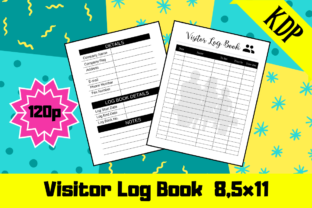
A successful visitor log is defined by its columns. An effective Visitor Log Book KDP Interior must anticipate the data points required for security audits, contact tracing, and general record-keeping without overcrowding the page. The balance between whitespace and information density determines whether a user will adopt the book or abandon it for a loose stack of paper. Standard professional layouts typically include specific fields that serve distinct legal and operational purposes.
- Date and Time In/Out: Essential for tracking duration of visits and verifying alibis or attendance records during emergencies.
- Printed Name and Signature: Provides non-repudiation; a signature confirms identity and agreement to facility policies.
- Company/Organization Affiliation: Crucial for B2B environments where vendors, contractors, and clients require different access levels.
- Person Visiting/Department: Allows receptionists to quickly route notifications and aids in post-visit accountability.
- Reason for Visit/Badge Number: Adds a layer of categorization useful for analyzing traffic patterns and security badge retrieval.
When evaluating a 120-page PDF interior, the consistency of these fields across every spread is paramount. Misaligned columns or varying header sizes create a frustrating user experience. High-quality interiors are tested to ensure that margins account for binding gutter loss, preventing data entry areas from disappearing into the spine. This technical precision is what separates a viable commercial product from a hobbyist project.
Diverse Applications Across Professional Sectors
The versatility of a standardized visitor log interior makes it applicable to a surprisingly wide array of end-users. Understanding these niches helps in tailoring metadata and marketing efforts, but it also informs the selection of the interior itself. Different sectors prioritize different aspects of the logbook's functionality.
Corporate Offices and Co-Working Spaces
For modern offices, particularly those sharing space with multiple tenants, the visitor log serves as both a security measure and a liability shield. In co-working environments where membership turnover is high, a physical book provides an immutable record of who was present during specific hours. A Visitor Log Book KDP Interior designed for this sector often features cleaner, minimalist aesthetics that align with professional branding. The 8.5 x 11 format allows ample room for detailed company names and multiple visitors from the same organization signing in simultaneously.
Educational Institutions and Childcare Centers
Schools and daycare facilities operate under strict regulatory frameworks regarding campus safety. Here, the logbook is not merely administrative; it is a safeguarding tool. Administrators require logs that are easy to audit and difficult to alter. The large trim size accommodates additional notes or verification initials often required in educational settings. Furthermore, because these institutions often have budget constraints, a KDP-printed option offers a cost-effective alternative to custom printing services, allowing schools to allocate funds elsewhere while maintaining compliance.
Medical Facilities and Therapy Practices
Privacy is the overriding concern in healthcare environments. While digital systems are common, many smaller practices prefer physical logs to avoid HIPAA complications associated with cloud storage or shared devices. A well-designed interior facilitates quick sign-ins without exposing previous entries unnecessarily, although users should always be advised on proper privacy practices. The durability of a 120-page book ensures it lasts through months of daily use, reducing the frequency of replacement and maintaining a continuous chain of custody for records.
Industrial Sites and Construction Zones
Rugged environments require straightforward, no-nonsense tools. Workers and inspectors visiting industrial sites may be wearing gloves or working in conditions where tablets are impractical. A physical logbook with a large 8.5 x 11 footprint is easier to write in while standing at a podium or makeshift desk. The "no bleed" specification is particularly relevant here, as it keeps all content safely within the printable safe zone, ensuring that even if the book gets slightly damaged or worn at the edges, the critical data columns remain legible and intact.
Technical Specifications for KDP Success
For creators leveraging a Visitor Log Book KDP Interior for their publishing business, adhering to technical standards is non-negotiable. Amazon’s printing tolerances are precise, and failing to meet them results in rejected uploads or poor-quality finished goods. The 8.5 x 11 inch trim size with no bleed is strategically chosen to minimize production risks while maximizing usability.
Understanding No-Bleed Margins
"No bleed" means that no ink extends to the very edge of the paper. All text, lines, and graphics must remain within a designated safe zone. For an 8.5 x 11 book, this typically requires a minimum margin of 0.25 inches on the outside, top, and bottom, and significantly more on the inside (gutter) to account for binding. A professionally formatted 120-page PDF will have already calculated these gutters based on page count. Thicker books require wider gutters; a 120-page logbook generally needs approximately 0.375 to 0.5 inches of inner margin to ensure the writing columns do not curve into the binding. Using a pre-tested interior eliminates the guesswork involved in these calculations.
Paper Quality and Opacity Considerations
KDP standard color paper is 55# (90 GSM), which is suitable for ballpoint pens and pencils but can show ghosting with markers or heavy gel pens. Effective logbook interiors account for this by using appropriate line weights and spacing. Heavy black bars or solid filled headers can sometimes cause curling or show-through. Optimized interiors use lighter gray tones for grid lines and structure, preserving the integrity of the page and ensuring that writing on one side does not obscure data on the reverse. This attention to printability is a hallmark of a premium interior asset.
Page Count Optimization
The 120-page length is a strategic sweet spot. It provides roughly six months of daily usage for an average office (assuming two pages per day or single-sided printing logic depending on layout), making it a semi-annual consumable. From a manufacturing standpoint, it creates a spine width sufficient for title printing, which enhances discoverability and shelf presence. Books under 100 pages often lack spine text capability, making them harder to identify when stored vertically. By utilizing a 120-page template, publishers ensure their product looks like a legitimate archival tool rather than a thin pamphlet.
Best Practices for Implementation and Customization
While a ready-made Visitor Log Book KDP Interior saves time, successful implementation involves more than just uploading a file. Users and publishers alike benefit from understanding how to maximize the utility of the format.
For business owners purchasing these books, establishing a clear protocol for logbook management is essential. This includes designating a specific pen (tethered to prevent theft), placing the book in a consistent location, and defining retention policies for completed volumes. Data privacy regulations vary by jurisdiction; some regions require visitor logs to be shredded after a certain period, while others mandate archival storage. The physical nature of the KDP book simplifies this lifecycle—when full, it can be dated, shelved, or destroyed according to policy without complex digital export procedures.
For publishers, differentiation is key in a competitive marketplace. While the interior provides the foundation, the cover design and metadata must communicate specific value propositions. Highlighting features such as "Large Print," "Gutter-Safe Design," or "120 Pages / 6-Month Supply" helps potential buyers understand exactly what they are receiving. Additionally, providing preview images that clearly show the column headers and margin safety reassures buyers that the interior is functional and professionally laid out. Testing the PDF yourself by printing a sample copy is always recommended to verify that the real-world output matches the digital proof, ensuring customer satisfaction and minimizing returns.
Long-Term Archival and Compliance Benefits
Beyond daily operations, these logbooks serve as historical records. In the event of insurance claims, legal disputes, or safety investigations, a contemporaneous physical record carries significant evidentiary weight. The permanence of ink on paper prevents retroactive alteration, a vulnerability inherent in many digital systems. By utilizing a standardized, professionally formatted interior, organizations ensure that their records are legible, organized, and admissible. The 8.5 x 11 size further supports long-term archiving, as it fits standard letter-size storage boxes and binders, facilitating efficient retrieval years after the initial entry was made.
Ultimately, the intersection of practical utility and publishing efficiency makes the Visitor Log Book KDP Interior a vital resource. Whether serving as a foundational product for a low-content publishing portfolio or as a reliable operational tool for a facility manager, the value lies in its thoughtful design and adherence to real-world requirements. By focusing on correct specifications, user-centric layouts, and broad applicability, this format continues to prove that traditional record-keeping remains relevant and essential in modern professional environments.