Evaluating a Notebook Interior with Piggy Bank Art for KDP Publishing
Selecting the right interior template is one of the most critical decisions in low-content book publishing. While the cover attracts the initial click, the interior determines customer satisfaction, review quality, and long-term sales velocity. A Notebook Interior with Piggy Bank Art occupies a specific niche within the broader category of financial journals and savings trackers. Unlike generic lined notebooks or complex budget planners, this format combines aesthetic appeal with functional thematic relevance. For publishers and creators evaluating resources for Amazon KDP, understanding the distinct characteristics, technical specifications, and market fit of this specific interior type is essential for making an informed investment.
Defining the Product Category and Technical Specifications
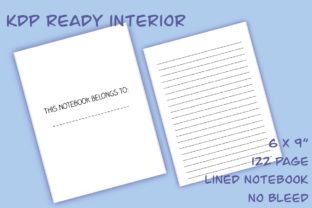
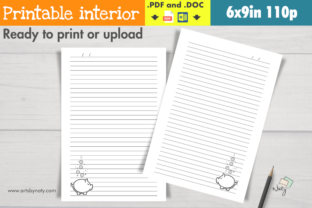
A Notebook Interior with Piggy Bank Art is not merely a collection of blank pages; it is a themed medium designed to reinforce a specific behavior or mindset. In this context, the piggy bank and coins illustration serves as a visual anchor, reminding the user of their financial goals every time they open the book. When evaluating a ready-to-upload pack, technical precision is paramount. The standard specification for this resource includes a 6x9 inch trim size, which is the industry standard for personal journals due to its portability and cost-effective printing. The 110-page count offers a substantial feel without pushing the spine width into a higher pricing tier or creating binding issues common with thinner books.
The availability of both PDF and DOC files represents a significant functional advantage. The PDF ensures that the piggy bank art remains crisp and correctly positioned during the KDP upload process, eliminating formatting shifts that often occur with image-heavy documents. Conversely, the editable DOC file provides necessary flexibility. Specifically, the ability to edit the "This notebook belongs to" page and the "Copyright" page allows publishers to customize the product for different branding strategies or gift-giving occasions without requiring advanced graphic design software. This dual-format approach balances print-ready reliability with customization potential, a tradeoff that pure PDF-only or pure template-only products often fail to achieve.
Comparing Themed Interiors Against Generic Alternatives
When researching notebook interiors, creators typically encounter three primary categories: generic lined paper, structured financial planners, and thematic illustrated notebooks. Each serves a different market segment and carries distinct pros and cons.
- Generic Lined Notebooks: These are high-volume, low-margin commodities. While they are easy to produce, they face immense saturation. A Notebook Interior with Piggy Bank Art differentiates itself by offering perceived value through design. Customers are often willing to pay a premium for a notebook that feels specialized rather than utilitarian.
- Structured Financial Planners: These contain tables, expense logs, and calculation fields. While highly functional, they have a steep learning curve for users and a higher barrier to entry for creators regarding content accuracy. The piggy bank art notebook sits in the middle ground; it encourages saving through psychology and aesthetics rather than rigorous accounting. It is less intimidating for beginners or younger audiences.
- Clip-Art Compilations: Some interiors use scattered, unrelated graphics. The distinct advantage of a cohesive Piggy Bank Art theme is narrative consistency. The illustration supports the book's purpose rather than distracting from it. This coherence is frequently cited in positive reviews as a marker of quality.
The decision between these alternatives depends on the target audience's intent. If the goal is strict budget tracking, a structured planner is superior. However, if the goal is habit formation, gratitude journaling related to finances, or a gift item, the illustrated notebook offers a better user experience.
Assessing Editability and Intellectual Property Safety
One of the most significant risks in purchasing KDP interiors is licensing ambiguity. Many resources claim to be "ready for upload" but retain watermarks or restrict commercial modification. A legitimate Notebook Interior with Piggy Bank Art must be entirely watermark-free. Watermarks not only look unprofessional in a printed product but can also lead to account warnings on KDP if detected as stock content overlays. Verifying that the product explicitly states "no watermarks of any kind" is a non-negotiable safety check.
Furthermore, the scope of editability matters. Being able to modify the ownership page and copyright section transforms a static asset into a proprietary product. This capability allows publishers to:
- Add their own pen name or brand logo to the copyright page.
- Customize the "Belongs To" page for seasonal variations (e.g., "Christmas Savings Journal" vs. "Back to School Savings").
- Insert affiliate links or QR codes to related digital resources on the back matter.
Resources that lock these elements limit the publisher's ability to build a recognizable brand series. When comparing options, prioritize those that grant full commercial rights and source file access over cheaper alternatives that offer only flattened, uneditable PDFs.
Market Fit and Audience Alignment
Understanding who actually buys a notebook featuring piggy bank art prevents misalignment between product and marketing. This interior style performs best in specific sub-niches rather than the general stationery market.
Financial Literacy for Youth: Parents and educators often seek tools to teach children about saving money. The cute piggy bank illustration appeals to this demographic more effectively than a spreadsheet-style ledger. The 6x9 size is also appropriate for smaller hands and backpacks.
Savings Challenge Participants: Adults participating in viral savings challenges (such as the 52-week challenge or envelope stuffing) often prefer aesthetically pleasing trackers over dry accounting books. The art serves as motivation. In this context, the notebook acts as a companion to digital tracking apps rather than a replacement.
Gift Market: Themed notebooks are perennial gift items. A piggy bank motif signals "prosperity" and "good luck," making it suitable for housewarmings, graduations, or New Year gifts. Generic notebooks rarely carry this symbolic weight.
Conversely, this interior may be a poor fit for corporate B2B clients or professionals seeking minimalist, gender-neutral office supplies. Evaluating your existing catalog or audience demographics is necessary before adoption. If your brand focuses on serious investment analysis, the whimsical nature of piggy bank art might dilute your authority. However, for lifestyle finance, personal development, or educational niches, the alignment is strong.
Tradeoffs and Practical Limitations
No single interior solution is perfect. Recognizing the limitations of a Notebook Interior with Piggy Bank Art helps manage expectations and avoid negative customer feedback.
Ink Usage and Print Costs: Illustrations consume more ink than simple lines. On KDP, color interiors significantly increase printing costs, which compresses royalties. Most piggy bank art interiors are designed in grayscale or black-and-white line art to maintain standard printing costs. Publishers must verify whether the art is optimized for B&W printing; colored artwork converted to grayscale can sometimes appear muddy or too dark. High-quality line art retains clarity and keeps the book affordable.
Space Efficiency: Art takes up real estate. A page featuring a large piggy bank illustration has less writable space than a fully lined page. For users who need maximum density for note-taking, this can be frustrating. Successful publishers often mitigate this by using art primarily on section dividers, title pages, or as subtle corner accents rather than dominating every spread.
Niche Ceiling: While differentiation is good, hyper-specific themes have lower search volume than broad terms. You will likely sell fewer units of a piggy bank notebook than a plain journal, but the conversion rate and profit margin per unit may be higher due to lower competition. This requires a shift in strategy from volume-based to margin-based publishing.
Making the Final Selection Decision
Choosing to utilize a Notebook Interior with Piggy Bank Art should be based on a strategic assessment of your publishing goals. It is the right choice if you are targeting the personal finance, education, or gift niches and require a balance of aesthetic charm and functional simplicity. The inclusion of both PDF and editable DOC formats, combined with a watermark-free guarantee and customizable front matter, addresses the primary technical and legal concerns of professional KDP publishers.
However, if your objective is to create a comprehensive accounting tool or a minimalist professional diary, alternative formats will serve you better. Evaluate the specific art style against your brand identity, confirm the print-cost implications of the illustration density, and ensure the licensing terms support your long-term commercial intentions. By weighing these factors objectively, you can determine whether this specific interior resource aligns with your portfolio strategy or if exploring other categories would yield a better return on investment. Ultimately, the value lies not just in the file itself, but in how well its specific attributes match the needs of your intended reader.