Evaluating Composition Notebook Cover for KDP: Scalability and Design Efficiency
For self-publishers operating within the Amazon Kindle Direct Publishing (KDP) ecosystem, efficiency is often just as critical as creativity. The low-content book market, particularly the composition notebook niche, relies heavily on volume and variety. A Composition Notebook Cover for KDP serves as a foundational template designed to streamline the production process. Rather than creating unique artwork for every single listing, sellers utilize these pre-formatted covers as a base layer. This approach allows for the rapid application of patterns, textures, or simple graphics to create distinct products without starting from scratch.
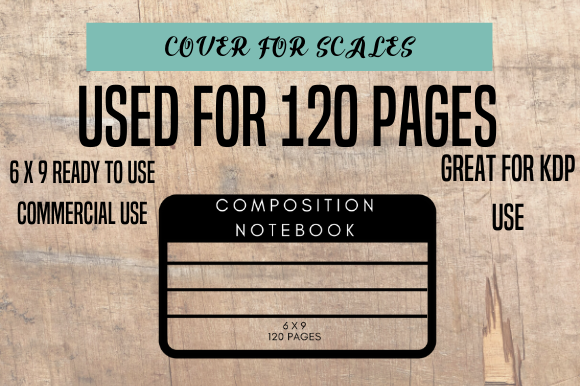
Understanding the utility and limitations of these templates is essential for sellers evaluating their workflow. These assets are typically provided as high-resolution PNG files with white backgrounds, ensuring compatibility with various design platforms. Whether using Canva, Adobe Photoshop, Affinity Photo, or other editing software, the objective remains consistent: reducing the time between concept and publication while maintaining professional print quality.
The Role of Scalable Assets in Low-Content Publishing
The primary value proposition of a standardized Composition Notebook Cover for KDP is scalability. In traditional publishing, cover design is a bespoke process tailored to specific content. In low-content publishing, the interior remains static—usually college-ruled or wide-ruled paper—making the cover the sole differentiator. Sellers interested in this asset are generally looking to solve a logistical bottleneck rather than an artistic one.
Scalability in this context refers to the ability to replicate success across multiple niches. A single structural template can accommodate floral patterns for spring, spooky motifs for autumn, or minimalist geometric shapes for year-round appeal. By separating the technical specifications (spine width, bleed areas, trim size) from the aesthetic elements, sellers can focus entirely on surface design. This separation of concerns reduces the cognitive load associated with formatting and minimizes the risk of printing errors caused by incorrect margins or spine calculations.
Benefits of Pre-Formatted Templates
Evaluating whether to incorporate ready-to-use covers into a business model requires weighing specific operational advantages against creative constraints. Several practical benefits make these assets attractive for specific types of sellers:
- Technical Compliance: KDP has strict guidelines regarding bleed, safe zones, and spine width based on page count. A verified template eliminates guesswork, ensuring that the final PDF meets printing requirements before submission.
- Software Agnostic Workflow: Because these assets are delivered as PNGs on white backgrounds, they do not lock sellers into proprietary file formats. Users can leverage free tools like Canva or professional suites like Illustrator, providing flexibility regardless of budget or skill level.
- Rapid Iteration: Testing market demand becomes faster when production time decreases. Sellers can upload five variations of a pattern in the time it would normally take to format one custom cover, allowing for quicker data collection on what resonates with buyers.
- Consistency: Maintaining uniform margins and title box placement across a series creates a cohesive brand appearance on author pages, which can improve perceived professionalism.
Tradeoffs and Strategic Considerations
While efficiency is valuable, reliance on a standard Composition Notebook Cover for KDP introduces tradeoffs that must be managed. Objective evaluation requires acknowledging where this tool falls short.
The most significant consideration is market saturation. Because scalable templates lower the barrier to entry, many sellers utilize similar frameworks. If the underlying pattern or graphic applied to the template lacks originality, the resulting product may become indistinguishable from competitors. The template solves the formatting problem, but it does not solve the differentiation problem. Sellers must still invest effort in sourcing or creating unique surface designs to avoid competing solely on price.
Additionally, rigid templates can limit creative expression. Standard composition notebooks have defined visual boundaries, such as the classic marble pattern area or specific label boxes. Deviating from these norms to create modern or avant-garde layouts may require modifying the template itself, which negates some of the time-saving benefits. Sellers aiming for highly customized or illustrated covers may find pre-made bases restrictive rather than helpful.
There is also the matter of licensing and exclusivity. When evaluating any digital asset, sellers must verify usage rights. Non-exclusive templates mean others have access to the same base structure. While the final combination of pattern and template may be unique, the structural skeleton is shared. For sellers building a premium brand, this lack of exclusivity may be a deterrent compared to investing in custom formatting.
Situational Fit: When to Use vs. When to Avoid
Determining whether a scalable cover asset aligns with current goals depends on the seller’s specific stage of development and business strategy.
Strong Fit Scenarios
This type of asset is ideally suited for sellers focused on pattern-based niches or seasonal trends. If the business model relies on releasing collections tied to holidays, school years, or aesthetic trends (e.g., cottagecore, dark academia), the speed advantage is substantial. It is also appropriate for beginners who are still learning KDP technical specifications; using a proven template acts as a safety net while they develop formatting skills. Furthermore, sellers managing large catalogs benefit from the standardization, as it simplifies inventory management and ensures consistent quality control across hundreds of listings.
Alternative Considerations
Conversely, sellers focusing on high-ticket, specialized journals or guided notebooks may find better value in custom design. These products often command higher prices because of their unique value proposition, justifying the additional time investment in bespoke formatting. Additionally, established designers with existing workflows and mastered templates may gain little marginal benefit from acquiring new base assets. If a seller already possesses a compliant, tested master file, adding another generic template adds complexity without increasing capability.
Practical Decision-Making Insights
For those deciding to proceed with a Composition Notebook Cover for KDP, integration should be strategic rather than automatic. The following insights can guide effective implementation:
- Audit Current Workflow: Before acquiring new assets, measure how long formatting currently takes. If the bottleneck is idea generation rather than technical setup, a template will not increase output. Solve the actual constraint first.
- Verify Technical Specs: Always cross-reference the template dimensions against current KDP guidelines. Platform requirements can change, and outdated assets can lead to rejected manuscripts. Confirm bleed settings and spine width calculations match the intended page count.
- Test Compatibility: Ensure the PNG resolution is sufficient for print (typically 300 DPI). Test the file in the intended software environment to confirm layers behave as expected and that transparency or white background removal functions correctly.
- Customize Beyond the Surface: To mitigate saturation risks, consider making minor structural adjustments to the template. Altering font choices for labels, adjusting color grading, or combining multiple elements can create enough distinction to stand out in search results.
Ultimately, a scalable Composition Notebook Cover for KDP is a utility, not a strategy. It facilitates execution but does not replace market research or design sensibility. Sellers who view it as a component of a broader system—rather than a shortcut to revenue—are best positioned to leverage its benefits while avoiding common pitfalls associated with low-content publishing. Evaluating this asset through the lens of operational efficiency and long-term brand sustainability ensures that the decision supports genuine business growth rather than mere activity.