Evaluating the Incoming Mail Tracker KDP Interior for Publishing and Personal Organization
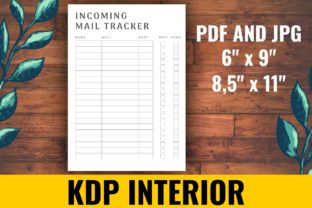
For self-publishers and individuals seeking structured organization, the Incoming Mail Tracker KDP Interior represents a specific niche solution within the low-content book market. This resource is designed to streamline the creation of physical logbooks intended for tracking correspondence, packages, and document receipt. Unlike generic notebooks, this interior provides a pre-formatted structure that addresses the specific data points required for effective mail management. The product is currently available in two distinct formats: PDF and JPG, catering to different publishing workflows and customization needs. Furthermore, it offers versatility through two standard trim sizes, 6x9 inches and 8.5x11 inches, allowing creators to target different user demographics ranging from portable personal use to comprehensive office logging.
Functional Design and Structural Utility
The primary value proposition of the Incoming Mail Tracker KDP Interior lies in its functional layout rather than aesthetic embellishment. A well-designed tracker must balance writing space with data density. This interior typically includes dedicated columns for essential tracking metrics such as date received, sender name, subject or description, action required, and status updates. For KDP publishers, this pre-structured approach eliminates the hours of design time usually required to create aligned tables and headers. The consistency of the grid ensures that when printed via Amazon’s print-on-demand service, the margins and bleed areas remain compliant, reducing the risk of manuscript rejection or printing errors.
From a usability standpoint, the inclusion of 100 pages strikes a practical balance. It provides sufficient volume for several months of daily logging without making the book excessively thick or heavy. For end-users, a 100-page logbook is less intimidating than a massive ledger, encouraging consistent use. For publishers, this page count optimizes printing costs while maintaining a perceived value that justifies a competitive retail price. The repetitive nature of the interior also ensures that users develop muscle memory when filling out entries, which is crucial for long-term adherence to any organizational system.
Format Flexibility: PDF vs. JPG
The availability of both PDF and JPG formats addresses distinct technical requirements in the publishing ecosystem. The PDF version is generally the industry standard for KDP interiors. It preserves vector quality, ensuring that lines and text remain crisp at any zoom level or print resolution. PDFs are also easier to merge with cover files or modify using vector editing software if minor adjustments are needed. Publishers who prioritize professional print quality and future-proofing their assets will likely prefer this format.
Conversely, the JPG format serves a different segment of creators. Rasterized images can be advantageous for those using design platforms like Canva or Photoshop Elements, where importing multi-page PDFs can sometimes be cumbersome or result in formatting shifts. JPGs allow for easy drag-and-drop placement and can be individually edited if a creator wishes to add unique graphics, watermarks, or instructional pages between logs. However, users must ensure the resolution is sufficiently high (typically 300 DPI) to prevent pixelation in print. Having both options included in the Incoming Mail Tracker KDP Interior package significantly increases its accessibility for creators with varying levels of technical proficiency.
Size Variations and Audience Targeting
The decision to offer the interior in both 6x9 inch and 8.5x11 inch dimensions demonstrates an understanding of market segmentation. These two sizes serve fundamentally different use cases and audiences.
- 6x9 Inch Edition: This compact size is ideal for personal use, freelancers, and mobile professionals. It fits easily into briefcases, backpacks, and desk drawers. The smaller footprint suggests portability and convenience, making it suitable for tracking personal mail, small business invoices, or freelance client correspondence. Users in this demographic often prioritize space efficiency and may not require extensive notes sections.
- 8.5x11 Inch Edition: The larger format targets office environments, administrative assistants, property managers, and educators. The increased surface area allows for wider columns, more detailed descriptions, and additional tracking categories. This size is appropriate for high-volume mailrooms, legal offices, or shared workspaces where multiple people may need to reference the log. The extra space also accommodates users with larger handwriting or those who need to attach sticky notes and reference numbers directly onto the page.
By providing both sizes, the Incoming Mail Tracker KDP Interior enables publishers to create a cohesive brand series. A publisher could release a "Personal Mail Log" in 6x9 and a "Business Correspondence Tracker" in 8.5x11 using the same core design language, effectively cross-selling to different customer avatars while minimizing additional design effort.
Practical Applications and User Demographics
Understanding who actually uses these trackers is essential for effective marketing and product positioning. The Incoming Mail Tracker KDP Interior is not merely a notebook; it is a compliance and organization tool for specific professional and personal scenarios.
Small Business Owners and Entrepreneurs: For solopreneurs managing inventory returns, vendor shipments, and tax documents, a physical tracker provides a tangible audit trail that digital tools sometimes lack. The act of physically logging an item can reinforce memory and ensure nothing slips through the cracks during busy periods.
Property Managers and Landlords: Tracking tenant notices, maintenance requests, and legal correspondence is a critical liability protection measure. A standardized logbook created with this interior can serve as evidence of timely receipt and processing of important communications.
Educators and Administrators: Schools and training centers receive vast amounts of paperwork. Department heads and administrative staff benefit from a centralized logging system to track student records, grant applications, and inter-departmental memos.
Serious Hobbyists and Collectors: Individuals who frequently order specialized parts, collectibles, or international goods often need to track customs statuses and delivery confirmations. This demographic values the ability to annotate packages with condition reports upon arrival, something a standard delivery app cannot accommodate.
Quality Considerations and Publishing Best Practices
While the Incoming Mail Tracker KDP Interior provides a solid foundation, the final quality of the published book depends heavily on the creator’s implementation. Publishers should conduct thorough test prints before listing. Check the gutter margin carefully; on a 100-page book, the inner margin must be sufficient to prevent text from disappearing into the binding, especially for the 6x9 version where space is already at a premium.
Paper quality is another factor. KDP standard color paper is 55# (90 GSM), which is adequate for pencil and ballpoint pen but may show bleed-through with gel pens or markers. Creators should consider adding a "This Book Belongs To" page or an instruction page at the front to add perceived value. Additionally, leaving the first few pages blank or including a yearly index can enhance usability. These small additions differentiate a professional product from a generic template dump.
It is also vital to verify the licensing terms associated with the interior. Ensure that the purchase grants commercial rights for KDP publishing. Some resources restrict the number of copies or require attribution. Confirming these details upfront prevents potential account issues or copyright disputes later. The dual format inclusion (PDF/JPG) usually suggests a comprehensive commercial license, but due diligence is always recommended.
Limitations and Realistic Expectations
No single resource is perfect, and the Incoming Mail Tracker KDP Interior has inherent limitations that users should recognize. As a static template, it lacks the dynamic adaptability of digital spreadsheets or database software. Users cannot sort, filter, or search entries. This makes it best suited for linear, chronological logging rather than complex data analysis.
Furthermore, because this is a pre-made interior, there is a risk of market saturation if multiple publishers use the exact same file without modification. To mitigate this, creators should customize the cover extensively and consider altering the interior slightly—perhaps by adding a logo, changing fonts, or inserting divider pages—to create a unique selling proposition. Relying solely on the stock interior without branding or differentiation may result in a product that blends into the background of search results.
Finally, while 100 pages is a standard length, it may not suit all needs. High-volume offices might find it insufficient for a full year, requiring them to purchase multiple copies. Conversely, low-volume users might find it wasteful. Publishers can address this by clearly stating the intended duration or volume capacity in the book description, helping customers make informed purchasing decisions and reducing negative reviews related to mismatched expectations.
Strategic Value for Creators and End-Users
Ultimately, the Incoming Mail Tracker KDP Interior serves as a pragmatic utility asset. For KDP publishers, it reduces the barrier to entry in the organizational niche, providing a professional-grade foundation that saves development time and ensures technical compliance. The availability of multiple formats and sizes allows for strategic portfolio expansion and audience targeting. For end-users, it offers a reliable, distraction-free method for managing physical correspondence in an increasingly digital world. The tactile nature of a physical logbook provides a sense of control and permanence that apps often fail to replicate.
When evaluated objectively, this resource succeeds by focusing on core functionality over unnecessary features. It solves a specific problem—tracking incoming items—with clarity and consistency. Whether used as a standalone product or as part of a broader suite of organizational tools, it delivers tangible value to both the creator who publishes it and the individual who relies on it for daily operations. Success with this interior depends not on the template itself, but on how thoughtfully it is implemented, marketed, and integrated into a larger workflow or publishing strategy.