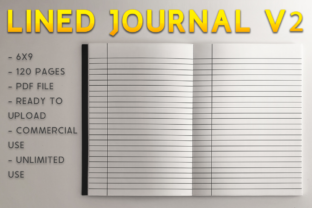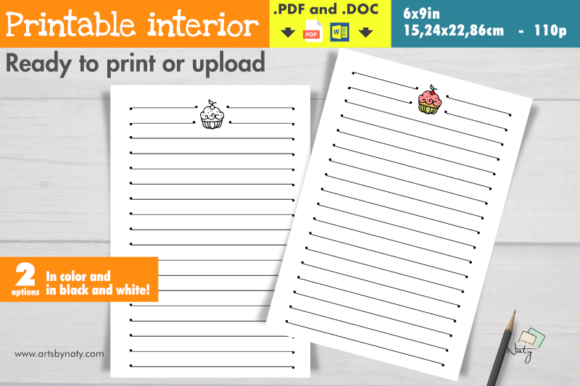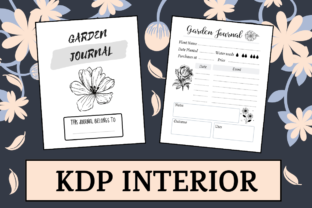
Lined Journal KDP Template: A Practical 8.5 x 11 No-Bleed Solution for Low-Content Publishing
Creating a low-content book for Amazon KDP often feels like a balancing act between creativity and technical precision. For publishers, educators, and entrepreneurs looking to release a functional notebook without spending weeks formatting margins, a Lined Journal KDP Template serves as an essential shortcut. This specific 8.5″ x 11″ no-bleed design eliminates the most common publishing errors associated with interior files. Instead of wrestling with gutter settings or safe zones in design software, you receive a pre-formatted PDF that is ready for immediate upload. The utility here isn't just about saving time; it is about ensuring your product meets professional standards from the first proof copy.
Why the No-Bleed 8.5 x 11 Format Matters
Understanding why this specific template configuration exists helps clarify when to use it. The 8.5″ x 11″ size is the standard letter paper dimension in North America, making it instantly recognizable and comfortable for users accustomed to school notebooks, office stationery, and academic journals. When paired with a "no bleed" setting, the lined pages maintain a consistent safety margin around all four edges. This means the lines never touch the trim edge of the book.
For new KDP publishers, bleed is frequently where projects fail. If you select "no bleed" during upload but your file has content extending to the edge, Amazon will reject it. Conversely, if you select "bleed" but your file doesn't account for the extra 0.125 inches, your lines might get trimmed off. This Lined Pages Template removes that ambiguity entirely. It is designed specifically for the no-bleed option, providing a generous white border that keeps handwriting clear of the binding and safe from trimming variations. This reliability makes it ideal for creators who want to focus on cover design and niche selection rather than interior layout troubleshooting.
Educational and Academic Applications
Tutors, homeschoolers, and teachers represent a significant demographic for this type of template. In educational settings, consistency aids learning. A standardized Lined Journal Template allows educators to create custom writing workbooks, spelling practice books, or daily reflection journals for students without hiring a graphic designer. Because the 8.5 x 11 size offers ample vertical space, it accommodates larger handwriting typical of younger learners or those practicing penmanship.
Consider a scenario where a language tutor wants to provide vocabulary practice books for a semester. Using this 120-page template, they can quickly publish a branded workbook series. The no-bleed format ensures that even if students write heavily near the margins, their notes remain legible and intact. For university professors creating supplementary course materials, this template provides a clean, distraction-free canvas for lecture notes or lab observations, distinguishing their custom resources from generic store-bought notebooks.
Professional and Business Use Cases
Beyond education, freelancers, coaches, and small business owners utilize lined journals as tangible extensions of their brand. A life coach might offer a gratitude journal as part of a workshop package, while a real estate agent could provide open house sign-in books or client note-taking journals. In these commercial contexts, the interior quality must match the professional exterior. The Lined Journal KDP Template provides that baseline quality assurance.
For corporate trainers or HR departments, this template facilitates the creation of onboarding notebooks or meeting logbooks. Since the file is a single PDF containing 120 pages, it hits a sweet spot for spine width—thick enough to look substantial on a desk, yet light enough to keep printing costs manageable. Entrepreneurs testing new niches appreciate this balance; it allows for rapid prototyping of physical products. You can test whether your audience prefers a minimalist lined format over a dotted or grid layout without investing in complex custom interiors.
Personal Projects and Hobbyist Publishing
Not every KDP project aims for mass-market sales. Many users leverage this template for personal or community-based projects. Genealogy enthusiasts often create family history journals where relatives can record memories in their own handwriting. Writers participating in NaNoWriMo sometimes publish personal draft journals to track progress. Community groups might create shared storytelling books or prayer journals.
In these intimate scenarios, the usability of the Lined Pages Template is paramount. The spacing is optimized for standard ballpoint or gel pens, preventing the frustration of lines that are too narrow or too wide. The no-bleed margin also acts as a visual breathing room, which is psychologically important for journaling. When users feel cramped by margins that run into the gutter, they stop writing. This template’s generous safe zone encourages continued use, making the final product more valuable to the end-user regardless of whether it is sold commercially or gifted personally.
Strategic Considerations Before Uploading
While this template streamlines production, successful publishing requires thoughtful application. Before downloading or using this Lined Journal KDP Template, consider how the fixed 120-page count aligns with your goals. One hundred twenty pages creates a spine approximately 0.27 inches thick (depending on paper choice), which is sufficient for spine text but limits bulk. If your niche demands a thicker volume, you may need to combine multiple templates or seek higher page counts. However, for entry-level journals, gratitude logs, or specialized workbooks, 120 pages is often the optimal length for perceived value versus price point.
You should also evaluate your cover design strategy. Since the interior is standardized, your cover carries the entire burden of differentiation. A generic lined journal with a generic cover will struggle in search results. Successful publishers use this template as a foundation, then invest effort in niche-specific cover art, compelling titles, and keyword optimization. The template solves the interior problem so you can dedicate resources to marketing and branding.
Technical Workflow and Best Practices
Using this resource correctly prevents avoidable rejections. Follow this workflow to ensure compatibility:
- Verify Trim Size: Confirm your KDP project setup is exactly 8.5″ x 11″ before uploading. Even a 0.01-inch discrepancy will cause errors.
- Select No Bleed: During the upload process, explicitly choose the "No Bleed" option. This template does not include bleed allowance.
- Check Paper Type: Decide between white and cream paper based on your audience. White paper typically suits academic and professional journals, while cream reduces glare for personal journaling and creative writing.
- Preview Thoroughly: Always use the KDP Previewer tool to inspect margins. Ensure the lines sit comfortably within the safe zone and that the gutter margin allows for easy writing near the binding.
- Avoid Modification Risks: While you can technically edit the PDF, altering line spacing or margins defeats the purpose of a pre-validated template. If you need different specifications, seek a template built for those dimensions rather than forcing adjustments that may trigger printing errors.
Maximizing Value Through Intentional Design
The true advantage of a ready-made Lined Journal KDP Template lies in what it enables you to do next. By removing the technical friction of interior formatting, it shifts your focus toward serving a specific audience better. Whether you are an educator creating curriculum-aligned writing pads, a therapist designing mindfulness journals, or a publisher building a catalog of low-content books, this template provides a reliable, professional-grade foundation.
Success in low-content publishing rarely comes from the interior alone; it comes from matching a functional format to a genuine user need. This 8.5 x 11 no-bleed lined journal template addresses the universal need for clean, usable writing space while adhering strictly to KDP technical requirements. When applied thoughtfully within a broader publishing strategy, it transforms from a simple PDF file into a scalable asset for education, business, and personal expression. The key is to view it not as the final product, but as the efficient starting point that makes your unique vision possible.